It is very refreshing to read a professional book about teaching reading through the workshop approach at the secondary level. Cris Tovani, in So What Do They Really Know? Assessment That Informs Teaching and Learning (Stenhouse, 2011), describes her practice with high school students, and most examples are from ninth graders. Her students are diverse, some reading as much as six years below grade level and some several years above, and they are from varied cultural backgrounds. She teaches in the block schedule, with 100-minute classes. She has five sections with twenty to thirty students in each class. Knowing that Tovani is a full-time teacher with a normal teaching load adds weight to her information. I appreciate it when she says things like, "I probably should do it this way, but I don't have time, so I do it that way instead, and I still get the data I need." Instead of advice from researchers or literacy coaches or professors or full-time think-tankers, this is advice from the trenches. That adds credibility to her words of wisdom.
One suggestion Tovani makes is to use text annotations as assessment data. This is the second thing I've read in as many days about the value of annotating texts for both the student and the teacher. The other was from Smokey Daniels and Nancy Steineke's Texts and Lessons for Teaching Literature with 65 Fresh Mentor Texts (Heinemann, 2013). These authors insist that annotation is critical for showing thinking while reading. Daniels and Steineke provide a lesson specifically for teaching annotation, while Tovani provides examples of her own model and student samples to show the kinds of information a teacher can glean from annotated texts. Both books are very clear about how to teach annotation and what can be expected from students.
I know my high school expects students to annotate texts extensively from the tenth grade onward. However, in my eighth grade class, I have students use sticky notes or their Reading Notebook for responses instead of writing directly on or near the text. This has been somewhat successful, but only for students who are already comfortable responding with stickies. Most of my students avoid jotting notes while they read because they say it slows them down too much and they lose the flow of the story when they stop so often. I have accepted that as long as they stop periodically to respond in their Reading Notebook in a longer entry. Maybe I need to re-think this.
I was impressed with how easily Tovani was able to pull information from the annotations about where students struggled, where they got stuck, where they lost comprehension which then affected the rest of the piece, and where students were spot-on in their thinking. I got the impression that Tovani knew her students as readers much better than I know mine, despite my ernest attempts at reading conferences and comprehension spot-checks. I also marvelled at how quickly she could pull out these little gems from a few quickly jotted notes, and then spot a trend or gap or next step to address in the next lesson.
I think I will expect more annotations this year, probably still on sticky notes because students don't buy their texts. I will gather them more frequently, instead of only mid-way and unit end. I know I will need practice to see where students are successful and where they need support. All this will take time, but I think having visual evidence of their thinking will help students see their growth as thinkers, help me to give just-in-time instruction during conferences, and help parents to understand the kind of reading work we are doing in class. That's a lot of bang for one small change.
Welcome to Pohl Vault, a collection of reflections on being a middle school language arts & social studies teacher.
August 8, 2013
August 1, 2013
Re-reading is Comfort Food
This summer has been filled with touching the past. I attended two family reunions: one for my husband's parents' 60th anniversary, and one with my side of the family. I got together with friends from previous schools, some I hadn't been with for seven years, and some I'd met with quite recently. And I had a meal with friends from high school who I hadn't seen for more than 25 years. Each encounter was filled with talk of childhood memories, shared moments, and filling in recent news.
Thinking through these get-togethers made me realize the comfort of keeping in touch with my past, whether it was remembering the wildness of my youth, or celebrating how much my children have changed, or swapping stories about places we visited together. All of these layers make up who I am today. Sometimes I forget about those layers, but seeing people from my past helps me remember, and that's comforting. I can relax into these encounters knowing that the people around me accept me for who I am, the good the bad and the ugly as it were. Touching the past with them is like comfort food.
On my walk this morning, I listened to Text Messages: Recommendations for Adolescent Readers, a podcast on ReadWriteThink.org sponsored by NCTE and IRA. In episode 62, the host, Jennifer Buehler, talked with teen librarians about how they encouraged reading with teens. One of the points they all agreed upon was that re-reading a book is OK. With all the chaos going on in a teen's life, reading an old favorite is a way to de-stress and stay in touch with something familiar and constant.
In other words, re-reading is comfort food.
As I get ready to launch the Independent Reading Program in a couple of weeks, I need to remember that there is a place for re-reading old favorites. I believe re-reading needs to be balanced with new reads, titles that stretch and challenge. But coming back to a book read a year or two ago keeps kids feeling comfortable, successful, and safe. They often find new layers the second (or third) time around, seeing characters more fully or identifying motivations they hadn't thought of before. They find foreshadowing and symbols. The work they do is deeper when re-reading, and they do it willingly because they already know they love the book.
I confess. I have books I re-read too. So I know how they feel. Just like meeting up with friends and family comforts me, connects me and deepens my understanding of who I am, re-reading a book takes me deeper into my understanding of the story. It's comforting to go back there.
Thinking through these get-togethers made me realize the comfort of keeping in touch with my past, whether it was remembering the wildness of my youth, or celebrating how much my children have changed, or swapping stories about places we visited together. All of these layers make up who I am today. Sometimes I forget about those layers, but seeing people from my past helps me remember, and that's comforting. I can relax into these encounters knowing that the people around me accept me for who I am, the good the bad and the ugly as it were. Touching the past with them is like comfort food.
On my walk this morning, I listened to Text Messages: Recommendations for Adolescent Readers, a podcast on ReadWriteThink.org sponsored by NCTE and IRA. In episode 62, the host, Jennifer Buehler, talked with teen librarians about how they encouraged reading with teens. One of the points they all agreed upon was that re-reading a book is OK. With all the chaos going on in a teen's life, reading an old favorite is a way to de-stress and stay in touch with something familiar and constant.
In other words, re-reading is comfort food.
As I get ready to launch the Independent Reading Program in a couple of weeks, I need to remember that there is a place for re-reading old favorites. I believe re-reading needs to be balanced with new reads, titles that stretch and challenge. But coming back to a book read a year or two ago keeps kids feeling comfortable, successful, and safe. They often find new layers the second (or third) time around, seeing characters more fully or identifying motivations they hadn't thought of before. They find foreshadowing and symbols. The work they do is deeper when re-reading, and they do it willingly because they already know they love the book.
I confess. I have books I re-read too. So I know how they feel. Just like meeting up with friends and family comforts me, connects me and deepens my understanding of who I am, re-reading a book takes me deeper into my understanding of the story. It's comforting to go back there.
July 22, 2013
Summer Reading: Variety is the Spice of Life
Summer is a time for reading. I have found myself reading a variety of genres again. Here's what I've got on my shelf (by the way, I'm typing this on my new iPad, so I'm feeling a bit awkward with this new device):
Pathways to the Common Core by Lucy Calkins, Mary Ehrenworth, and Christopher Lehman- This professional book was a companion to the Heinemann course I just finished: Harnessing the Common Core State Standards to Reach Higher Levels of Reading and Writing. It is very closely tied to the work done by the Teachers College Reading and Writing Project of Columbia University, and has practical suggestions for implementing the CCSS. I found it useful and a quick read.
Adult reading: The Round House by Louise Erdrich. This is a crime mystery which deals with a range of interesting issues, not just solving the crime. Set on a Native American reservation and told through the eyes of an adolescent boy, it explores issues of Indian-white race relations, mother-son relationships, and traditional vs. modern cultural beliefs.
Adult reading: The Twelve Tribes Of Hattie by Ayana Mathis. Each chapter in this story follows a different child/ren of Hattie's, and each chapter moves a little further through history, beginning in 1927 and finishing in 1980. This book would appeal to readers who enjoyed The Secret Life of Bees and The Help. I would consider recommending it to high schoolers, but some of the content is a little too mature for middle schoolers.
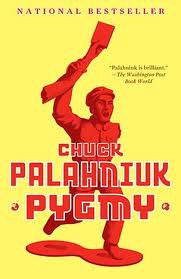
Adult reading: Pygmy by Chuck Palahniuk. Written in broken English for all 256 pages, this was a slog through violent, sex-crazed, drug-dealing plot events involving middle school aged kids. One review likened it to South Park, not one of my favorite satire shows either. If you want to read this author, try Invisible Monsters or Rant.
Young adult fiction: Enclave and Outpost by Anne Aguirre. These first two of the series follow Deuce and Fade as they struggle to survive in a post-apocalyptic world. The final book of the series, Horde, hasn't come out yet, although there is a related short story/ novella called Endurance that follows two of their friends, Stone and Thimble. This has enough violence and romance to appeal to both boys and girls, as well as to fans of dystopian books such as The Hunger Games.
YA fiction: Zel by Donna Jo Napoli. Another fractured fairy tale, this one follows Rapunzel. Set in 16th century Switzerland, Napoli weaves together Medieval culture, the Swiss alps, and magic into an engaging story of obsessive love.
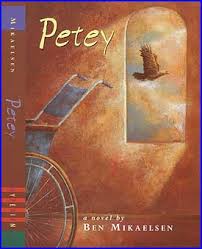
YA Fiction: Petey by Ben Michaelson. This was a heart-breaking story of a disabled man who found love and friendship despite horrific living conditions and no learning opportunities.
More YA fiction: Bucking the Sarge by Christopher Paul Curtis. Not his best, but enjoyable.
The Kill Order by James Dashner. The prequel to Maze Runner... Not good. Do I want to read Maze Runner now? so many kids have commended it!
Twisted by Laurie Halse Anderson. She is a great storyteller, and this was another good one, though not as deep or researched as Speak or Chains.
Nick and Nora's Infinite Playlist byRachel Cohn and David Levithan. Too much... of everything. Really over the top. I can see how it appeals, in a Ferris Beuler's Day Off kind of way, but I wouldn't recommend it for middle school readers.
I just ordered a new professional book today, So What Do They Really Know? Assessment that Informs Teaching and Learning by Cris Tovani through Stenhouse.
And I also bought two companion books by Smokey Daniels and Nancy Steineke: Texts and Lessons for Teaching Literature and Texts and Lessons for Content-Area Reading.
These three professional books should help with my daily lessons, while the young adult novels will help me have conversations and make recommendations to students. The adult novels keep me satisfied as a lifelong reader. And the course and book on the CCSS keeps me current with recent educational trends so I can respond proactively to any changes that may come my way.
Summer gives me time to explore all these important reading niches in my life. The time to catch up on reading and writing is invaluable. It's summer vacation, yes, but it's also a time to read and reflect. What have you been reading this summer?
Pathways to the Common Core by Lucy Calkins, Mary Ehrenworth, and Christopher Lehman- This professional book was a companion to the Heinemann course I just finished: Harnessing the Common Core State Standards to Reach Higher Levels of Reading and Writing. It is very closely tied to the work done by the Teachers College Reading and Writing Project of Columbia University, and has practical suggestions for implementing the CCSS. I found it useful and a quick read.
Adult reading: The Round House by Louise Erdrich. This is a crime mystery which deals with a range of interesting issues, not just solving the crime. Set on a Native American reservation and told through the eyes of an adolescent boy, it explores issues of Indian-white race relations, mother-son relationships, and traditional vs. modern cultural beliefs.
Adult reading: The Twelve Tribes Of Hattie by Ayana Mathis. Each chapter in this story follows a different child/ren of Hattie's, and each chapter moves a little further through history, beginning in 1927 and finishing in 1980. This book would appeal to readers who enjoyed The Secret Life of Bees and The Help. I would consider recommending it to high schoolers, but some of the content is a little too mature for middle schoolers.
Adult reading: Pygmy by Chuck Palahniuk. Written in broken English for all 256 pages, this was a slog through violent, sex-crazed, drug-dealing plot events involving middle school aged kids. One review likened it to South Park, not one of my favorite satire shows either. If you want to read this author, try Invisible Monsters or Rant.
Young adult fiction: Enclave and Outpost by Anne Aguirre. These first two of the series follow Deuce and Fade as they struggle to survive in a post-apocalyptic world. The final book of the series, Horde, hasn't come out yet, although there is a related short story/ novella called Endurance that follows two of their friends, Stone and Thimble. This has enough violence and romance to appeal to both boys and girls, as well as to fans of dystopian books such as The Hunger Games.
YA fiction: Zel by Donna Jo Napoli. Another fractured fairy tale, this one follows Rapunzel. Set in 16th century Switzerland, Napoli weaves together Medieval culture, the Swiss alps, and magic into an engaging story of obsessive love.
YA Fiction: Petey by Ben Michaelson. This was a heart-breaking story of a disabled man who found love and friendship despite horrific living conditions and no learning opportunities.
More YA fiction: Bucking the Sarge by Christopher Paul Curtis. Not his best, but enjoyable.
The Kill Order by James Dashner. The prequel to Maze Runner... Not good. Do I want to read Maze Runner now? so many kids have commended it!
Twisted by Laurie Halse Anderson. She is a great storyteller, and this was another good one, though not as deep or researched as Speak or Chains.
Nick and Nora's Infinite Playlist byRachel Cohn and David Levithan. Too much... of everything. Really over the top. I can see how it appeals, in a Ferris Beuler's Day Off kind of way, but I wouldn't recommend it for middle school readers.
I just ordered a new professional book today, So What Do They Really Know? Assessment that Informs Teaching and Learning by Cris Tovani through Stenhouse.
And I also bought two companion books by Smokey Daniels and Nancy Steineke: Texts and Lessons for Teaching Literature and Texts and Lessons for Content-Area Reading.
These three professional books should help with my daily lessons, while the young adult novels will help me have conversations and make recommendations to students. The adult novels keep me satisfied as a lifelong reader. And the course and book on the CCSS keeps me current with recent educational trends so I can respond proactively to any changes that may come my way.
Summer gives me time to explore all these important reading niches in my life. The time to catch up on reading and writing is invaluable. It's summer vacation, yes, but it's also a time to read and reflect. What have you been reading this summer?
July 7, 2013
CCSS Reading Literature Standards: How My Classroom LIbrary Supports Text Complexity
My attention over the past week has been on the CCSS Reading
Literature standards, which, to tell the truth, are a bigger stretch than the
writing ones. Rather than get overwhelmed by the depth of reading I should be
expecting my students to be doing, I focused on something that I felt I could
begin to tackle: tracking students' reading lives in order to move them to ever
increasingly complex texts.
Two years ago, when 4 of the 6 of us MS ELA teachers went to the Teacher's College Reading Institute (and the other two went the year afterward), we toyed with the idea of book ladders and tracking for text complexity. However, there was other--bigger--reading work to be done first, and we put the text complexity work on the back burner. Now that we are more comfortable with Reading Notebooks, reading workshop, reading conferences, and choosing texts for our units, we are ready to tackle text complexity.
We already have a robust independent
reading expectation in the Middle School. Students at our school are, in
general, enthusiastic readers. We have an excellent library with a
knowledgeable librarian who is always willing to guide and suggest next reads for
students. We ordered nearly 200 books per classroom for this coming fall to
refresh and expand our classroom libraries. We teachers know something about
the books our kids are reading, and feel comfortable recommending titles when
kids need a book in their hands. Our groundwork is set. The opportunity is ripe.
Here is how I would like to see this
reading work play out for each of us in the department this coming school year:
Classroom Library Work
- Inventory books: Start with the
Amazon order spreadsheet. Add Booksource order books to list
and others already on shelves (title, author-last name, first name)
- Determine genre groups: Fantasy
(Fantasy: Science Fiction, Fantasy: Paranormal), Realistic Fiction
(Realistic Fiction: Suspense/Thrillers, Realistic Fiction: Mystery),
Historical Fiction, Classics, Short Stories, Graphic Novels, Nonfiction
(Nonfiction: Autobiography/ Biography/ Memoir), Poetry. Scholastic Book Wizard can check genres. Add to spreadsheet.
- Level books: Use Scholastic Book
Wizard to
look up Guided Reading Level, and Lexile level. Add to spreadsheet.
- Sort spreadsheet: What
organizational structure will best work for your needs? Genre sort? Author
sort? Level sort? Combinations?
- Organize library to make it easy for students to find the books they want to read and are at a good level for them.
Moving Students Up Ladders of Text Complexity
- Assess: Here are several ways to
find out what level our students are reading at the beginning of the year.
- Ask students to
write down one book they read recently (end of previous grade or over the
summer) that they feel is a just-right book for them (interesting, easy
to read but with enough challenge to keep you thinking). Find that book’s
genre/ guided reading/ Lexile level. What plan could you make for that
student’s next book to read?
- Consider giving
an all-class reading passage with comprehension questions at the level
appropriate for the beginning year at your class. TCRWP recommends that
students should be reading at the following levels at the beginning of
the year: Grade 6: V/W (avg. V), G7: W/X (avg. W), G8 X/Y/Z. Another way
to do this is to use students’ spring MAP score to guesstimate a
student’s reading level, and give that level of passage to the student
instead of the general one. How would this data help you get books into
students’ hands?
- Use fall MAP
score to determine Lexile level of books to read (approximately). Because Lexile levels reflect only 75% comprehension, we will need to subtract
250 points to find out what Lexile level books the student can read at a
90% comprehension level (independent). According to the CCSS, by the end
of the year, students should be reading books at the following Lexile
level (I am assuming this level reflects the 75% comprehension target): Grade 6: 925-1070, G7: 970-1120, G8: 1010-1185.
- Fluency: Use
early Reading Logs to track students’ fluency rate of pages read per
minute. By end of 8th grade, students should read about 1 page per
minute. Or have students read silently in their books for 5 minutes,
marking where they started and stopped. Then figure out words per minute.
TCRWP recommends the following oral reading rates: Level V: 115-150 wpm,
Levels W-X-Y: 125-160 wpm, Level Z: 130-165 wpm. If a student is reading
very slowly, it may indicate that the reader should be in easier texts or
needs fluency support.
- “Red Flag”
students: For students who are struggling or are advanced readers, we may
want to do a formal running record to find reading level and record
fluency, error analysis, and comprehension strengths and gaps. You have
the TCRWP Reading Assessment binder in your room to use for this.
- Plan: Now that we have an idea of
where a student is at the beginning of the year, what sequence of books
can we suggest for each student that will push them to the next level?
Consider both guided reading level (complex characters, plot sequence,
mature content) and Lexile (long words and sentences). Perhaps a student
can move up Lexile while staying at the same guided reading level. Or
perhaps a student can move up to the next guided reading level, but at a Lexile level below the student’s target. This way they can work on one aspect at
a time, and it won’t be a large jump.
- Use TCRWP book ladders to get recommendations (found in back of Reading Assessment
binder). Highlight the books available in the classroom library.
- Should our spreadsheet and book ladders be available for students to see? If they are involved in the goal of moving to increasingly more complex texts, they should have the information needed to make good choices of next books. Make this process transparent.
- Periodic check-ins: How will you sustain this work across the year?
July 1, 2013
CCSS New Writing Skills for Grade 8
Continuing my thinking about the CCSS Writing Standards and descriptors for my 8th grade writing program...
I read the section about the writing standards in Calkins, Ehrenworth, & Lehman's Pathways to the Common Core to get a better idea of what the standards say and their implications for implementation. One thing they suggested doing was looking horizontally across the descriptors to find out what new skills are required at each grade level. Since much of the wording is the same from grade to grade, it took a close look to find the new skills embedded in each descriptor. Once I did that, I found out the following new skills in the 8th grade writing descriptors (see bolded italics):
Argument Writing:
Most of these new skills make sense to me. For example, I already teach lessons about varied transitions, using "well-chosen" facts, and using transitions that signal the reader that the counterclaim is coming up. I understand how and why to teach reflection as part of narrative writing.
However, there are a few that are a bit unclear. What does "acknowledge and distinguish the claim from alternate or opposing claims" mean? Does that mean the claim and counterclaim are discussed in the introduction? Perhaps it means the kind of thesis that is worded: Some may think that ___ is ____; however, it really is _____ because of ____, ____, and ____.
Also, the technology skill is rather opaque. How can students publish writing using technology so that they "present the relationship between information and ideas efficiently"? What is the relationship between information and ideas? Isn't that what the topic sentences of the essay do? If so, why is this part of publishing with the technology standard?
Unfortunately, the CCSS exemplars are not very helpful. I am counting on Teacher's College to gather exemplars to help demonstrate some of these new skills. They already have performance assessments and anchor papers on a skills continuum for narrative, information, and opinion/argument writing, which are (going to be?) available for purchase through Heinemann. I hope these materials can help me and my colleagues see what the subtle differences are between grade 6, 7, and 8 writing pieces.
I read the section about the writing standards in Calkins, Ehrenworth, & Lehman's Pathways to the Common Core to get a better idea of what the standards say and their implications for implementation. One thing they suggested doing was looking horizontally across the descriptors to find out what new skills are required at each grade level. Since much of the wording is the same from grade to grade, it took a close look to find the new skills embedded in each descriptor. Once I did that, I found out the following new skills in the 8th grade writing descriptors (see bolded italics):
Argument Writing:
- Introduce claim(s), acknowledge and distinguish the claim(s) from alternate or opposing claims
- Use words, phrases, and clauses to create cohesion and clarify the relationships among claim(s), counterclaims, reasons, and evidence.
- organize ideas, concepts, and information into broader categories
- develop the topic with relavant, well-chosen facts (etc.)
- use appropriate and varied transitions to create cohesion
- Use narrative techniques, such as dialogue, pacing, description, and reflection to develop experiences (etc.)
- Use a variety of transition words...to convey sequence...and show the relationships among experiences and events.
- Use technology... to publish writing and present the relationships between information and ideas efficiently
Most of these new skills make sense to me. For example, I already teach lessons about varied transitions, using "well-chosen" facts, and using transitions that signal the reader that the counterclaim is coming up. I understand how and why to teach reflection as part of narrative writing.
However, there are a few that are a bit unclear. What does "acknowledge and distinguish the claim from alternate or opposing claims" mean? Does that mean the claim and counterclaim are discussed in the introduction? Perhaps it means the kind of thesis that is worded: Some may think that ___ is ____; however, it really is _____ because of ____, ____, and ____.
Also, the technology skill is rather opaque. How can students publish writing using technology so that they "present the relationship between information and ideas efficiently"? What is the relationship between information and ideas? Isn't that what the topic sentences of the essay do? If so, why is this part of publishing with the technology standard?
Unfortunately, the CCSS exemplars are not very helpful. I am counting on Teacher's College to gather exemplars to help demonstrate some of these new skills. They already have performance assessments and anchor papers on a skills continuum for narrative, information, and opinion/argument writing, which are (going to be?) available for purchase through Heinemann. I hope these materials can help me and my colleagues see what the subtle differences are between grade 6, 7, and 8 writing pieces.
Subscribe to:
Posts (Atom)