Welcome to Pohl Vault, a collection of reflections on being a middle school language arts & social studies teacher.

September 5, 2015

Disciplinary Literacy in History: Thinking Like a Historian

There has been a lot of buzz in the education community over the past year or two about "disciplinary literacy" as distinct from "content literacy". In a nutshell, disciplinary literacy is doing the work of the discipline, and teaching students explicitly how to do that work. By contrast, content literacy is learning how to read and write in the content areas-- a valuable skill, but not the whole package.

I am an English Language Arts teacher by passion and training, and a Social Studies teacher by default. I understand teaching reading and writing. I understand how to teach reading and writing in Social Studies. What I haven't understood is what historians actually do when they read and write (beyond what I was already teaching). I decided I needed to find out.

CC0 by shotput on pixabay
Just as I was starting to poke around last spring for a workshop to take over the summer that focused on disciplinary literacy, I saw an announcement by NCSS for a MOOC they sponsored called "Improving Historical Reading and Writing." Ta da! Just the ticket (and it was FREE!). This 15-module course opened up the world of historical thinking to me. Here are some big "ah ha's":

Historians gather multiple pieces of evidence about a historical question they have. If they don't know anything about the historical question, they start with a general secondary source to get a sense of the event. Next, they try to find several primary sources (journal entries, newspaper accounts, photographs or paintings, maps, inventories, etc.) that can dig down into the details from people who were there at the time. Historians want to piece together the puzzle and find their own interpretation of what happened in the past.
  • Historians do a lot of work before they even start reading-- a lot more work than ELA readers do. Historians consider the source: they search out the author, publisher, and date of the document first and consider questions of reliability: Who wrote it? Who published it? When and where was it published? Are these people biased or coming from a particular perspective? Can I trust this to be a reliable source? If not, can I use this source to gain an understanding of one particular point of view?
  • Historians also access all the background knowledge they have about the context in which the document was published before they start reading. What was going on during that time? What background knowledge do I already have about this event or person that will help me understand the information? Adding this layer of thinking about contextualization also helps readers think about reliability, bias, and perspective.
  • Historians do a lot of work while they read-- this is most like the work that ELA readers do. These days we call it "close reading." Historians are reading for the main idea and supporting details, but they are also watching the use of language to clue them into bias and perspective. They try to put themselves into the author's shoes to really dig into the human reality behind the writing.
  • Historians do a lot of work after they read, comparing and contrasting the information they just encountered with what they already know. Is the author adding to or confirming what I already know? Is this information different than what I already know? If so, how does it differ, and why would it differ? Can I find any other sources of evidence that can help confirm or deny this information? This act of corroboration ensures historians are looking at the full story, not just the single story which can be distorted by time, selective reporting, or bias. 
  • Historians tell other people what they found out so that their voice can add to the collective understanding of history. There are many ways to do this; book publishing is just one way. For students, this can mean debating issues, writing editorials, making public service announcements, starting or contributing to a social justice campaign, blogging, etc. 
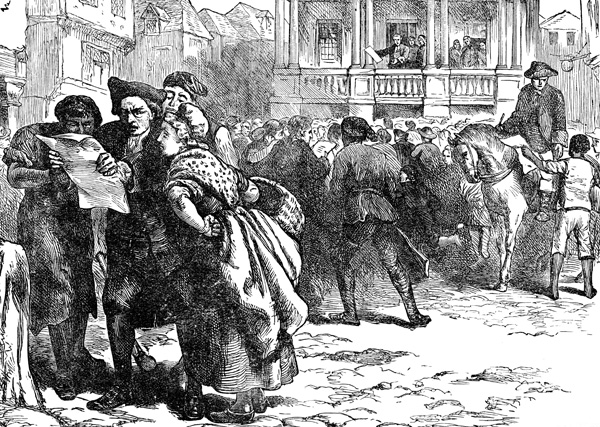
image found on Wikipedia website
The Stanford History Education Group website has a lot of great resources aligned to this thinking process. I used their 5-lesson Introduction to History series last week, and my 8th graders loved it! Keeping my historical thinking hat on while I teach Social Studies this year will ensure that I am not relying on the textbook as my sole resource, and it will (hopefully) develop the critical thinking stance that students should take when encountering any source of information-- from the internet, the newspaper, advertisements, or even their friends. That is a valuable life skill!

August 29, 2015

Moving into Standards-based Grading and Reporting

Our school took the plunge into standards-based grading and reporting this year. Oh, we've had standards for years, and our UbD unit planning has ensured that we at least knew which standards connected to the unit. But until the grade book and report card demanded that we specifically connect a grade to a standard, we continued on our merry way hoping our assessments captured at least some of the standards, much like flinging a handful of pebbles at a target, hoping some will hit.

We took a middle road, though: we don't have to report on every standard, just on "strands". For English Language Arts, we settled on Reading, Writing, and Listening & Speaking. They make sense to us and how our standards are organized... until we get to those units where we are using our reading to inform our writing content (e.g., literary essay and research reports), or have cross-disciplinary projects (e.g., investigative journalism about environmental issues).
cc 2.0 by Colin_K on Flickr

So this is our first Professional Learning Team (PLT) investigation: How can you use one assessment to grade and report on more than one standard strand?

There are a few sub-questions here: 
  • Is it fair to "double dip" (in other words, can one assessment be counted twice)?
  • How specific should we be about dividing up the assessment into "strands"? Could we just use one holistic score and put it in two strands? Or do we have to identify which section goes into which strand and keep track of it that way?
  • Do we even know which specific standards are being assessed on the assessment? If we were called on by a parent or administrator, could we justify the grade based on the standards assessed?
  • Does going to standards-based grading and reporting mean that we have to create more assessments, such as "artificial" tests and quizzes that get us away from our authentic assessments, so that we have enough evidence for the grade in a particular strand?
My inclination is to go for specifics, analyzing the assessment to identify where each standard is assessed and then tracking those parts for depth of student learning. This would be possible with a fairly simple template, though it would take more time before and after the assessment. Doing this kind of analysis would ensure that all the standards got assessed (and yes, we may need some more assessments, or expand the ones we have, to include all standards) and that the grade reported is actually reflective of achievement on the standards.
cc by ePublicist on Flickr

As our PLT moves through our cycle of continuous learning, we will be wrestling with these questions and others that come up. I hope we will be able to look at some models from other schools and settle on a system that makes sense for our school. 

We would love to hear feedback about what has worked in other schools. If you have a suggestion, please leave a comment!

May 2, 2015

Workshop Strategy Learning from Stevi Quate

Last week Stevi Quate returned to our school for another round of in-house professional learning. This time, she did a couple of demo lessons as a way for us to lift the level of our workshop teaching. I always learn so much by watching master teachers teach, even if it's just a new management technique or a quick formative feedback strategy. This time was no different. Here are a few things I picked up from Stevi's visit:
image from Into the Marchand Archive
  1. Pre- and post-assessment of the learning target: The learning target for the lesson was on the board and read aloud. Then Stevi had students line up depending on how well they could do the lesson: 1) I have no idea, 2) I think I can understand what to do, 3) I understand it but I can't do it, or I can do part but not all, 4) I understand it and can do it, 5) I really get it and can teach others with new examples. Once students were lined up at the beginning of the lesson, it was obvious how much scaffolding was needed to teach the lesson. By the end, it was clear how much learning had occurred and whether a follow-up lesson (whole group, small group, or individual) was needed. Quick, easy, no frills, and it got kids moving and thinking about the learning target.
  2. Use visuals as models in minilessons: We are in the midst of a nonfiction reading unit, with an emphasis on summarizing and answering thematic social justice questions. We have a model text that we've been reading through to teach summarizing skills (see my April 19, 2014 post about this), which was unfamiliar to Stevi. She turned to a visual image as her model text to teach her summarizing minilesson. It was engaging, short, and worked for two different minilessons: choosing the most important details for your summary ("I have my main idea; now which details should I include that best show it?"), and using relevant details to build an answer to a thematic question ("I see all these details; now what do these details tell me about the extent that power affects an individual?"). 
  3. Have students take notes on the teacher's thinking during a Think Aloud demonstration: After explaining the learning target, Stevi demonstrated doing it using a Think Aloud. While she was demonstrating the process, she asked students to take notes, not on the text, but on her thinking as she went through the text analysis. The goal was for students to pay closer attention to the demonstration, as well as having students construct the steps themselves instead of being told the steps. This was new to my students, and I think they were so caught up in the image and her analysis that they didn't get anything down. They also were not used to being asked to do that much noticing. At the end of her lesson, only a very few had anything down on their papers. However, despite the lack of response, this is a technique that I'd like to use more. Once students practice doing it a little bit, I think it will be a more valuable "brains-on" method than demonstrations without it.
Stevi demonstrated two lessons. After both, she said she felt she had scaffolded too much. Neither my teaching partner nor I thought the lessons were over-scaffolded. In fact, I thought she did less scaffolding than I usually do. I want to keep thinking about this comment because I think there is a bigger message here. Our students do ask a lot of questions and want very small, discrete, modeled steps to follow. The more open-ended the task, the fewer the students who succeed at a high level. I could look at this in two ways: 1) they need the scaffold to succeed, or 2) they need practice at open-ended, less directed tasks so that they can learn to be more self-directed and independent. I don't think I can drop all the scaffolds and go "cold turkey", but I do think I could do more (like the notes during the Think Aloud) to expect them to be more self-directed and better problem-solvers.

April 18, 2015

Using Public Service Announcements to Connect Early US History to Modern History

We had one week of school left before spring break. We had just completed an 8-week unit on the Road to Independence, which included the events leading up to the American Revolutionary War, the Declaration of Independence, and the War itself. Our next unit would focus on creating the Constitution, the Constitution itself, and the Bill of Rights. I was not eager to jump into it knowing spring break would erase any learning we started. We needed something engaging yet worthwhile to fill that week. Our one-week window seemed like a great opportunity to make some connections from early U.S. History to the modern world.

image from U.S. History Images website
One essential question for the Road to Independence unit was, When is it necessary for citizens to rebel against their government? This question is applicable to many revolutions from history, including the Arab Spring rebellions. Living in the Middle East, many student know something about the Arab Spring movement, they or their family come from one of the countries, or they (at least) have heard of the countries involved.

My teaching partner and I brainstormed several possibilities for what we could do: news casts, Venn diagrams, informational essay, etc. Then we pushed pause and thought about what we really wanted students to understand by the end of the mini-unit, a principle of government found in The Declaration of Independence: When governments start taking away citizens' rights and freedoms, citizens can take action to try to change or get rid of the government. 

Suddenly, it dawned on us: a Public Service Announcement  (PSA) alerting the public to the dangers of tyranny and specific (nonviolent) actions that citizens can do to act against them. Students could use examples from both U. S. History (1763-1775) and one of the Arab Spring countries (Tunisia, Libya, Egypt, or Syria in 2010-11) to support their ideas. Here's how the mini-unit played out:
  • Day 1: Build background knowledge about Arab Spring countries' dictatorship/ signs of tyranny. Students watched The Arab Awakening: Absolute Power (Al Jazeera English service, July 27, 2011, YouTube) and took notes in the center column of a 3-column note sheet:
 
  • Day 2: Research one of the Arab Spring countries to discover why citizens rebelled and how they took action. Because we had such a tight time frame, and because PSAs don't need a huge amount of information because they are so short, we provided students a list of about 3 resources (one of them Wikipedia) to use for their research. These research notes were captured in the left column of the notes sheet.
  • Day 3: Connect to U. S. History, understand the genre of PSAs, and work on PSA outline. Students worked with partners to brainstorm the U.S. History connections to the characteristics of a dictator, and then we shared out together (for example, filling the streets with soldiers to keep citizens controlled, like the British did after the Proclamation of 1763 and during the Intolerable Acts in Boston). They also reminded themselves of the actions the colonists took to try to get rid of the tyranny (boycott, petition, protest) and specific examples for each. Next, I showed several PSAs from the Ad Council and we analyzed the parts of a Public Service Announcement. This gave them a vision of what their product would look like. Finally, they used an outline template modified from the sample on the ReadWriteThink lesson, MyTube: Changing the World with Video Public Service Announcements. They would use the outline to voice over their visual when making their PSA movie. The outline my students used looked like this:
  •  Day 4: Prepare the visual presentation. Each box on the outline translates into one slide on the visual presentation (4 boxes = 4 slides). We used Google presentations because then we teachers could be shared on it and nothing gets lost. We emphasized using Creative Commons and images labeled for reuse when selecting images for their slides. I reminded them how to cite images correctly. And then I let them go.
  • Day 5: Make the PSA movie. Our technology integrator showed us how to turn a Google Presentation into a QuickTime movie with sound. Students scattered all around the hallways and courtyard to find a quiet place to voice over their slideshow. Using headphones with microphones allowed their sound to be much clearer than just using the computer's external mic. Once their 1:30-3:00 movie was done, they saved it into a shared Google folder so I could access it. 
  • Assessment: Once again, ReadWriteThink's PSA lesson came in handy. I modified their PSA rubric to fit our project:
    Surprisingly, students found the PSA project confusing. They wanted models (of this exact project, not PSAs in general), which we didn't have because it was a new idea. I was sure the project was straightforward and clear. They have written many essays this year, and this was just another form of an argument essay with a thesis (Watch out for the danger signs of tyranny and act if you see them), reasons (characteristics of dictatorship and nonviolent citizen actions), and examples to support (Arab Spring and U. S. History). 

    As I graded the projects, I noticed that about a third of the students took this and ran with it, about a third got the general idea, but missed out on some of the components, and about a third make a PowerPoint presentation complete with a title slide and an introduction, "Hi, I'm ____, and I'm going to tell you about my Arab Spring project", completely missing the concept.

    I like this project, and I think it was do-able in the time frame we had. I like the way it took U.S. History and transferred the big ideas into a more general and modern context. I like that it connected to our region and directly to some students' lives. 

    There are some things I will want to change (always). I will show them a model of this exact project (I have a few good ones now). I will be clearer with the goal of the project and help them see how it's just another argument essay. Transferring those essay skills to different genres is essential. And I will (maybe) give it another day or two. Still, despite its rough patches, I think this one is a keeper.

April 6, 2015

"Here's my project! Hope you like it :-)" Adjusting Tone to Fit Audience in Email Messages

CC image by Guudmorning via flickr
As a one-to-one laptop school, and as an ecologically-minded person, I find that I am using technology more and more in my classroom. Students do much more writing within Google docs or Word documents than with pencil on paper. For example, at the beginning of our last writing unit as we were generating poems, I gave students the option to have an online writer's notebook using a Google doc which they shared with me, or to use their paper notebook. In one class I had a 100% online notebook return, and in the other, it was over 80%. Grades and homework are posted online for students to access whenever they want. Students email me with projects attached or when they have questions. Students are very comfortable with technology, I am loving the ease of feedback, and we are all saving a lot of trees in the process. Lots of wins!

As a one-on-one laptop school, we spend a lot of time guiding students on making good choices while using technology. We have lessons on multitasking vs. "single tabbing", using time productively, evaluating the source of information, detecting bias, how to cite sources for information and images, and note-taking and paraphrasing to avoid plagiarism. But one thing we don't do in eighth grade is talk about writing emails.

A few days ago, during spring break, I received this email from a student:
"How come my grade didn't go up after the revolutionary war test even though it was sumitive [sic].

I got a 83 on my first test and a 93 on my second shouldn't my grade be like 89"
That was the whole thing. There was no subject in the subject box, no greeting or closing, no spell check or editing for mechanics or grammar.

CC image by CollegeDegrees360 via flickr
I was a bit taken aback by the tone of this email, although I'd gotten others like it throughout the years. I read it to my (non-teacher) friend who I was visiting at the time, and she was shocked at the rudeness. She suggested that I write back with an instructive or corrective message, something like "I will answer your question when you can address me with respect." That was certainly tempting.

Instead, I thought about what it was that bothered me about this email. Here's what I came up with:
  1. Tone: The student did not adjust his writing style to reflect his audience. The casual tone of this email reflects the way he talks to his friends, and is the kind of writing he does in a quick message. I am not his friend; I am his teacher. I expect a more formal tone.
  2. Structure: The lack of subject, greeting, and closing make this email feel aggressive and angry. When writing a letter, especially to someone in authority, it is customary to include formal structures and social niceties. 
  3. Care: This student obviously wrote this email in a hurry and sent it off. He did not take the time to edit or re-read before sending. This shows how little thought he put into the message, that he did not really care whether the message reflected the level of concern with which he intended it, and that he didn't consider that his reader deserves to read a well-edited message. 
  4. Misunderstanding: This student does not really understand how the grading system works. Yes, the two tests he is talking about are summative, and therefore go into the same category in the grading system (weighted 65% of the total grade). However, the first test was 83 points out of 100, and the second was 18.5 points out of 20. Since one has 5 times the number of points, it also has 5 times the weight on the grade. If I took 30 seconds to tell him this, he would probably say, "Oh, OK" and move on. However, if he actually looked at the grade book, he could figure this out himself. Instead of taking the time to do this, though, he would rather shoot a quick email to his teacher to get it sorted out.
The student is an eighth grade boy, a category of humans well known to be impulsive. He lives in a world where quick text messages and quick queries yield quick satisfactory answers. As a person, I know him to be a hard worker, a thoughtful friend, respectful of adults, and generally a nice boy. O don't think he intended to be rude; it just happened. So rather than sending a reprimand, I think I should view this as a little teachable moment for me.

I never established my expectations for how to address a teacher in an email at the beginning of the year. I never taught the required structure or tone. Although I give instructions like, "Use academic language" when blogging or during tests (and have explained what I mean by that phrase), I never applied that to email messages. If this is a battle I want to take on, I should approach it in a serious manner, teaching the conventions of email messages to adults just like I teach the conventions of essays or poetry. In the best case scenario, I should do this at the beginning of the year when all class routines are established. However, even now, I can teach it with an eye toward high school: "Your high school teachers will expect you to address them in a formal way when you write to them. It's important for you to practice this skill now so that it becomes a habit that will carry you through high school, onto college, and even into the workplace."

And I should also review how the grade book works, as well as how to see how the grades are calculated (there is a .pdf report option that shows how the grades work out). This will calm students down and help them see where the magical percentage number comes from.

In the fast pace of our lessons, I often get attachments without messages, or at most, "Here's my project. Hope you like it! :-)" I haven't worried about it in the past. I'm not going to go on an email rampage with my students now. However, it is a life lesson worth teaching, and obviously most students need to learn it, not just this one. And if I don't teach it, who will?